
News · · 2 min read
The FAA says Tesla's flying Roadster isn't an aircraft. Taiwan says a flying version would have to meet aviation law
After Tesla's thruster-powered Roadster demo, the FAA told CBS News that the vehicle "does not meet the FAA definition of an aircraft." NHTSA says it will monitor the car. Taiwan's transport ministry says any car that can fly would in principle have to comply with civil aviation law.
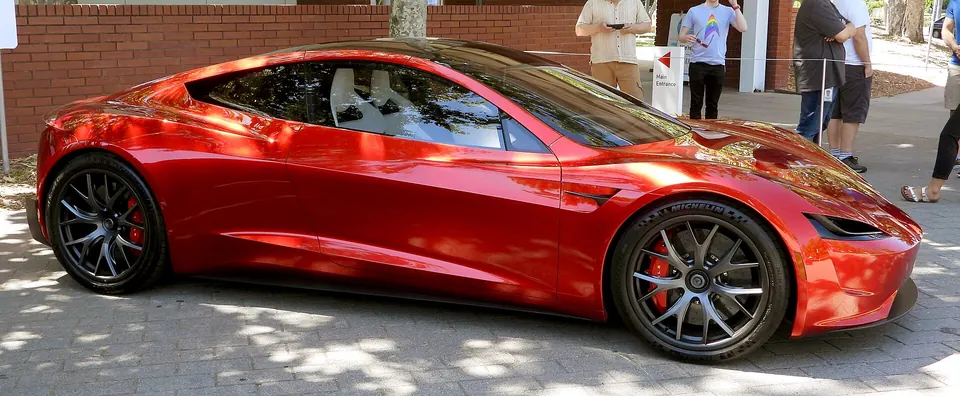
The day after Tesla showed its next-generation Roadster hopping on cold-gas thrusters, regulators started answering the obvious question: who oversees a car that leaves the ground?
United States: not the FAA's aircraft
"The Tesla vehicle does not meet the FAA definition of an aircraft," the Federal Aviation Administration told CBS News. The statement did not say which part of the definition the car fails to meet. Fortune reports the FAA gave the same answer to Politico. That means the agency wouldn't need to certify the car as airworthy.
The National Highway Traffic Safety Administration, which oversees vehicle safety but relies on automakers to self-certify, told CBS: "While the vehicle may appear to defy the laws of physics, the manufacturer must ensure that it does not defy applicable Federal Motor Vehicle Safety Standards and drivers must obey all local traffic laws. NHTSA will continue to monitor the situation and won't hesitate to act to protect the driving public."
CBS reports that a senior Department of Transportation official acknowledged there is no clear answer on oversight of the flying features and was skeptical the vehicle will actually be able to take off. Tesla's website says the single-seat "Rocket" version with the "full flight system" is not approved for public road use.
Taiwan: road rules plus aviation law
In Taiwan, the transport ministry said a Roadster on public roads would have to meet vehicle safety standards, including lights and brakes. Chao Chin-wei, a specialist in the ministry's public transport and supervision department, told PTS that if it can also fly, it should "in principle" meet civil aviation law. The ministry said it would look at the car's functions and how it is approved in the US, then discuss it with the relevant agencies.
TaiwanPlus reports that officials said this would mean drivers also need a pilot's licence, and that flying cars would face high barriers to market entry. In PTS's report, the licence point comes from an aviation academic, not the ministry.
Our take
Neither statement is a ruling on a product that won't be in production until 2028, according to Tesla. But they show the gap: in the US, the aviation regulator says the car isn't an aircraft, while the road regulator says it will watch. No regulator has approved the Rocket's flight system, and CBS says Tesla hadn't answered its question about which agencies the company is working with.
Sources
- CBS News: We asked the DOT who would oversee a flying car like Tesla's Roadster. The answer isn't readily clear. (Oct 16 2026)
- Fortune: Tesla is taking $250k deposits for Roadster with SpaceX thrusters. The FAA says it's not an aircraft (Oct 17 2026)
- PTS 公視新聞網: 特斯拉飛天車是否能上路引關注 交部:兼具飛行功能須符民航法 (Oct 17 2026)
- TaiwanPlus: Transport Ministry Says Flying Cars Must Meet Road and Aviation Rules (Oct 18 2026)
Facts as reported by the linked sources as of Oct 19, 2026. Company targets are plans, not guarantees. Corrections: see About.