
News · · 5 min read
Electra Defense says AFRL awarded $4.7 million to test the EL9
Electra said on November 9, 2026 that the Air Force Research Laboratory awarded Electra Defense a $4.7 million contract for ground and flight testing of the EL9 hybrid-electric Ultra-STOL aircraft and its propulsion. The EL9 is a fixed-wing airplane, not an eVTOL. Defense One, on November 16, calls the award a $4.7 million other transaction agreement from AFWERX and quotes an analyst saying it is not a signal the Air Force is ready to acquire this kind of aircraft. No type certificate is stated.
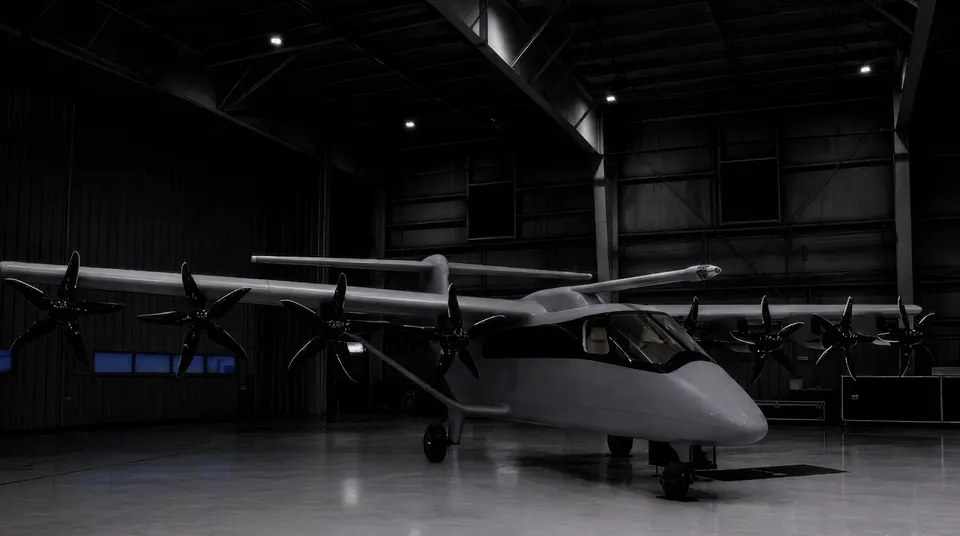
Electra said on November 9, 2026, in a release datelined Manassas, Virginia, that the Air Force Research Laboratory awarded Electra Defense a $4.7 million innovative capabilities opening contract. Electra says the contract is for ground testing and flight testing to advance hybrid-electric aircraft power and propulsion. It says the work covers the EL9 and its hybrid-electric propulsion, so the Air Force can assess ultra-short-takeoff-and-landing aircraft for military operations. Defense One, by Lauren C. Williams on November 16, 2026 at 06:33 PM ET, describes a $4.7 million other transaction agreement from AFWERX. Electra's lead sentence names the laboratory and an innovative capabilities opening contract. It does not say "other transaction" and it does not say AFWERX awarded it. The release's about section describes AFWERX as a division within the laboratory. That description is not the award sentence. This page does not merge the two accounts into one awarding body. An Electra page records both wordings. Earlier pages listed the Air Force among contracted customers and did not state this $4.7 million figure. This release states it. It is not the November 5 memorandum with VertiPorts by Atlantic, and it is not the October Manhattan flight.
The EL9 is a fixed-wing airplane
Electra calls the EL9 an ultra-short-takeoff-and-landing aircraft and, in the about section, a hybrid-electric Ultra Short airplane. The about section compares it with helicopters and eVTOLs. The comparison treats the EL9 as something other than an eVTOL. Defense One calls it a nine-seat hybrid-electric airplane, comparable to a Cessna Caravan or a Pilatus PC-12. The EL9 is a fixed-wing hybrid-electric Ultra-STOL aircraft. It is not an eVTOL.
Defense One writes that the aircraft can take off and land in just 150 feet. The November 9 release does not state that distance. Earlier pages on this site recorded 150 feet as Electra's design claim for the EL9. This page does not treat Defense One's sentence as a measured EL9 takeoff.
Electra says the contract work includes verification of hybrid-electric power and propulsion, extensive ground testing of the EL9 preproduction aircraft, and acoustic flight testing of battery-only low-signature ingress and egress for special operations. "Will conduct" is the release's tense for those evaluations. The announcement does not say that ground testing or acoustic flight testing under this contract has been completed. It also describes modeling and simulation of operational advantages. Defense One says "EL9 prototype." Electra says "EL9 preproduction aircraft" for the ground testing. This page keeps both words. Neither page says the aircraft has completed the tests this contract funds.
Douglas Royce, identified by Defense One as a senior aerospace and power systems analyst at Forecast International, says: "The contract isn't a signal that the USAF is ready to acquire this type of aircraft." The rest of his remark is about distributed operations and short or improvised runways as a concept that may be encouraged. "May" is his word. A test contract is not a purchase of the EL9.
Dates and sums that are not this test
Defense One reports a plan to fly the EL9 by early 2029, and it quotes a line that this begins the certification process. Early 2029 is a plan in that article. The November 9 release does not state a first-flight date. Beginning a certification process, in that quotation, is not an issued type certificate and not a certification basis. No certification basis is stated in either page.
Donn Yates, identified as vice president and general manager of Electra Defense, told Defense One the company is starting to move into design and development of the EL9, and that the Air Force is funding operational analysis it had not asked for before. He says Electra has teamed with Lockheed Martin Skunk Works on analysis of contested logistics in the Pacific. The November 9 release does not name Lockheed or Skunk Works. He also says the commercial airplane is piloted, that the design uses digital flight controls, and that optional piloting is something he expects to discuss in later announcements. "Not in an autonomy play up front" is his phrase. An uncrewed EL9 is not stated as a current aircraft. Those interview remarks are Defense One's. They are not in the November 9 release.
Electra says that in 2023 it received a Strategic Funding Increase award valued at up to $85 million for a full-scale preproduction aircraft, and that the collaboration has included demonstrations, most recently at the laboratory's Future Flag 25-3 exercise in 2025. "Up to $85 million" is not a statement that $85 million was paid, and it is not this $4.7 million contract. Defense One says the 2023 award was potentially $85 million and combines government and private money. The 2025 exercise is a prior demonstration in Electra's account. It is not a result of the November contract. Defense One also mentions a separate Joby testing contract and Agility Prime funding. Those are not this award.
The about section repeats that contracted customers include NASA, the Air Force, the Army and the Navy, along with over 2,200 letters of intent from 60-plus commercial customers. A letter of intent is not a firm order. The about section also says the Ultra Short technology delivers 2.5 times the payload and 10 times longer range with 70 percent lower operating costs than helicopters and eVTOLs. Those multiples are the company's comparison. This page does not treat them as measurements from this contract.
The photograph
The photograph is the one Electra published as the lead image of the November 9 release. The page does not print a separate caption. Defense One uses the same picture, credits Electra, and the file name includes "EL9 in Hangar." The picture shows an aircraft with a wing and propellers along it, inside a hangar. It is not a photograph of a flight. It is not evidence that the contract's ground testing or acoustic flight testing has been done. The photograph on the company page remains the October 26 EL2 demonstration in Manhattan. This hangar picture is not that flight, and Defense One identifies the New York aircraft as the two-seat prototype.
What is not established
The $4.7 million is the contract sum both pages state. It is not an aircraft price. Electra calls the vehicle an innovative capabilities opening contract from the Air Force Research Laboratory. Defense One calls it an other transaction agreement from AFWERX. This page does not pick one legal form. No type certificate and no certification basis are stated. Early 2029 flight is a plan in Defense One's article, not a date in the November 9 release, and it is not an issued certificate. The 150-foot figure is not in the November 9 release. Testing under this contract is described as work ahead, not as finished. Royce says the contract is not a signal that the Air Force is ready to acquire this type of aircraft. The letters of intent are not firm orders. The EL9 is not an eVTOL. The photograph is not a flight.
Sources
Facts as reported by the linked sources as of Nov 23, 2026. Company targets are plans, not guarantees. Corrections: see About.