
News · · 5 min read
Doroni says it has raised more than $60 million for the H1-X
Doroni Aerospace said on November 17, 2026 that it has raised more than $60 million from more than 20,000 investors in community-backed rounds for the H1-X. Aviation Week's visible text calls the rounds crowdfunding and says the company is preparing to fly the H1-X in the second half of 2027. Doroni says an advanced test campaign begins in 2027 and that it plans light-sport certification under the FAA MOSAIC rule. Those are plans. It says there are more than 600 pre-orders. Pre-orders are not firm orders. A special airworthiness certificate it says it holds for prototype testing is not a type certificate. No price is stated.
Doroni Aerospace said on November 17, 2026 that it has raised more than $60 million from more than 20,000 investors across its community-backed rounds. Vertical Mag labels the text a Doroni press release and says Doroni prepared and distributed it. The release calls Doroni a Florida flying car company building the H1-X personal flying vehicle. It does not name a city. Aviation Week's visible opening says Doroni says it has raised more than $60 million from more than 20,000 investors across a series of crowdfunding rounds, and that the Florida startup is preparing to fly the H1-X in the second half of 2027. The sentence on that page ends "The company said it plans to..." and the rest did not load. This page uses only that visible sentence and the visible caption. It does not treat the headline's "$60 million" as a different figure from "more than $60 million." No filing was opened. The amount is the company's claim, as those two pages report it. The Doroni and H1-X rows record it. A South Florida Business Journal address given for the same day returned 403 and is not used.
What the company says the money is for
The release says Doroni plans to put the capital toward hiring engineers, expanding partnerships, and beginning preparations for advanced test flights of the H1-X in 2027. Founder and chief executive Doron Merdinger's quoted remarks are about investors and a long-term vision of personal flight. They do not state a price, a delivery date or a certificate. Chief operating officer Rami Arbili said the company will complete the H1-X engineering program, then build and take "our prototype" into an advanced test campaign beginning in 2027, then "advance through light-sport aircraft certification under the FAA's new MOSAIC rule," and then scale manufacturing and a nationwide service network. "Will" and "beginning in 2027" are his words. 2027 is a target. Light-sport certification under MOSAIC is a plan. It is not described as granted, and it is not a type certificate. Aviation Week's visible sentence places the preparation to fly the H1-X in the second half of 2027. That is more specific than "beginning in 2027," and it is still a plan. The rest of the Aviation Week article was not available to compare.
The aircraft, as the release describes it
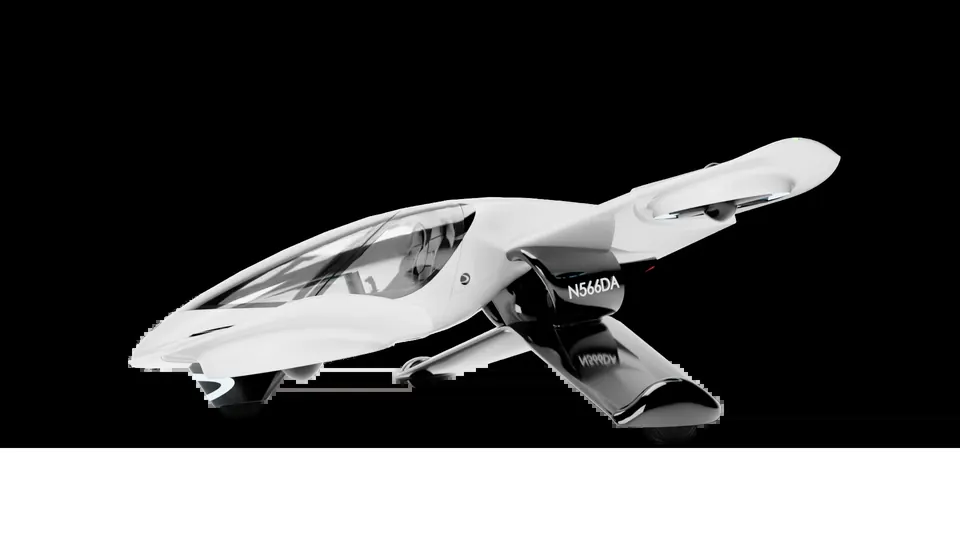
The release says the H1-X is designed as a two-seat personal flying vehicle with tandem wings and distributed electric propulsion. It says Doroni plans for it to take off and land vertically from private property where local rules permit, from existing helipads and from vertiports; to fit in a standard two-car garage and taxi on electric wheel motors; to charge at the same fast chargers electric cars use, reaching 80 percent in about 25 minutes; to use what it calls SOUL AI as a digital co-pilot; and to include a whole-airframe ballistic parachute and ten independent motors, which it says are engineered to maintain controlled flight after a single motor failure. "Designed" and "plans" are the release's words. Aviation Week's visible caption says the two-seat H1-X features tandem wings, four ducted lift fans and two pusher thrusters for forward flight, and credits Doroni Aerospace. This page did not read a specification sheet beyond those sentences. No price is stated.
The release says earlier prototypes have completed more than 70 test flights, "including one of the first manned test flights of its kind in the United States." "One of the first" and "of its kind" are the release's words. This page does not adopt them as a ranking, and it does not treat those flights as flights of the H1-X. The advanced test campaign for the H1-X is described as beginning in 2027.
The release says the company obtained an FAA special airworthiness certificate for prototype testing. It does not name the aircraft, the date or the purpose beyond prototype testing. A special airworthiness certificate is not a type certificate. The release says that this year Doroni signed an agreement with SES AI to supply batteries for its flying prototype and partnered with TLG Aerospace on structural, aerodynamic and certification engineering. "This year" is the release's phrase for those two agreements. This page did not open them. Certification engineering is not an issued certificate.
The release says the H1-X has drawn more than 600 pre-orders. A pre-order is not a firm order. No deposit, price or cancellation term is stated.
The image
The image is the one Vertical Mag published with the release. Its caption is "The Doroni H1-X. Doroni Aerospace Image." The page does not say the file is a photograph of a flight or of a test. It shows a white aircraft against a black background. This page labels it a rendering, not a photograph. Aviation Week's visible image is a separate Doroni file, an aircraft over a coastline, and that page does not call it a flight photograph. This page uses the Vertical Mag file.
What is not established
No securities filing was opened, so the total, the investor count and the word "raised" are the company's, as Vertical Mag and the visible Aviation Week sentence report them. Aviation Week's word is crowdfunding. The release's words are community-backed rounds. Neither page, in the text that loaded, names a regulation number for the offering. No price is stated. More than 600 pre-orders are not firm orders. The 2027 test campaign and the second half of 2027 are targets. Light-sport certification under MOSAIC is a plan, not an issued certificate, and it is not a type certificate. The special airworthiness certificate is not a type certificate, and the page does not say which aircraft it covers. The 70 flights are described as earlier prototypes. The garage, charging time, parachute and motor-failure claims are design plans in the release. The Business Journal page did not load. No official video of an H1-X flight was on the pages used.
Sources
Facts as reported by the linked sources as of Nov 23, 2026. Company targets are plans, not guarantees. Corrections: see About.